 [ SOMEBODY SHOULD BUY THIS ]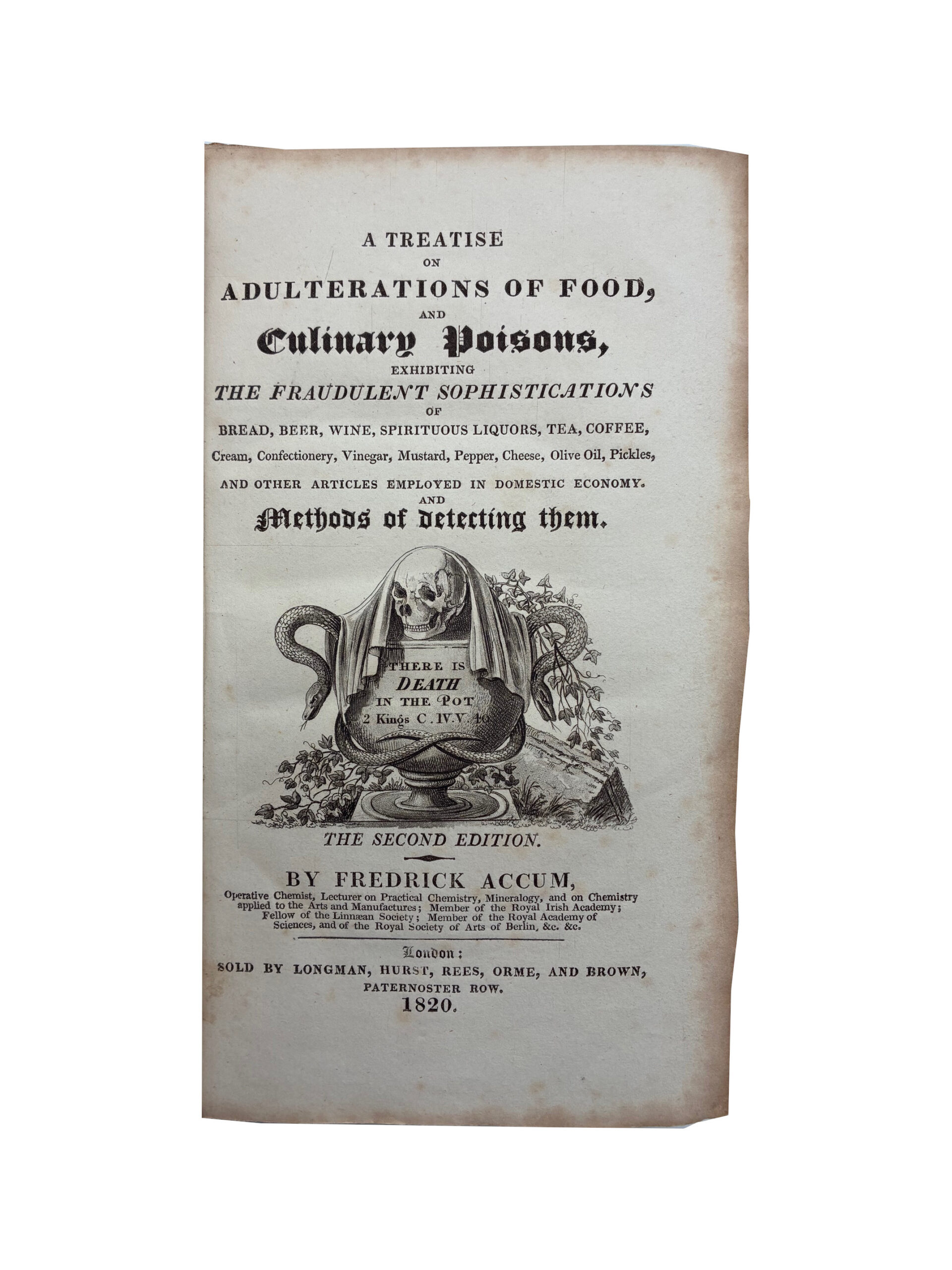
Death in the Pot: A Treatise on Adulterations of Food, and Culinary Poisons, Exhibiting the Fraudulent Sophistications of Bread, Beer, Wine, Spirituous Liquors, Tea, Coffee, Cream, Confectionery, Vinegar, Mustard, Pepper, Cheese, Olive Oil, Pickles, and Other Articles... Second edition
Frederick Accum (Friedrich Christian Accum, 1769–1838) · 1820
$497
Why it matters
"There is death in the pot." Accum borrowed the line from 2 Kings and turned it into the most sensational science book of 1820. A German chemist working in London, he bought ordinary groceries and tested them. He found alum in the bread, red lead in the cheese, copper in the pickles, sulphuric acid in the vinegar, and narcotic berries in the beer. Then he named names. His most quoted line still lands: the highway robber who steals a few shillings is hanged, "while he who distributes a slow poison to a whole community, escapes punishment." The first edition sold out within weeks, and this second edition followed the same year. Within a year Accum himself had fled England amid a scandal over pages cut from Royal Institution library books, which some saw as payback from the merchants he'd exposed. Accum's Treatise is routinely treated as the starting point of modern food-safety awareness in Britain. The first edition appeared in January 1820 and this second edition followed within months the same year, a reflection of how fast the book sold.
Why we're looking
The draw is the survival in original decorative publisher's boards — the celebrated design of entwined snakes, a spider in its web and a skull and crossbones over the motto "There is death in the pot" — plus the twelve-page publisher's catalogue bound in, both of which are usually lost when a copy is rebound. On price it sits only modestly below the market: Rabelais Inc. catalogues a rebound full-calf Very Good copy of the same second edition at $600, so this $497–511 ask is roughly $100 under that single comp, with the trade-off being a Good, rebacked copy rather than a sound rebound one.
Watch out for
The seller is upfront that the boards have been later rebacked with the title blocked in white, that corners are worn and edges chipped, and that the bottom corners of leaves Q7 and Q8 are missing (said not to touch text) — worth asking for images of those two leaves and of the rebacking. "Second edition" here is the publisher's own designation for a printing issued the same year as the first, so it is a contemporary issue rather than a later reprint, but a buyer chasing the January first edition should be clear that this is not it. The listing does not state whether the original front-board emblem is intact and legible under the wear, which is most of this copy's appeal.