Issue No. 9 · October 30, 2026
Old Book Hunter #9
Tonight is Devil’s Night, the eve of Halloween, when the old fear gets one more evening out. We’ve taken it literally. This issue is five books about the Devil and the company he kept, written by people who believed in him, people who hunted him, and one who tried to argue him out of existence.
In 1634, in the French town of Loudun, a convent of Ursuline nuns began to writhe, blaspheme and call out the names of their demons. The parish priest, Urbain Grandier, was tried for bewitching them and burned alive. A pact he had supposedly signed with Satan was entered as evidence. Eighty years later, a Protestant in Amsterdam published the whole affair as what he believed it was: a frame-up dressed as a possession.
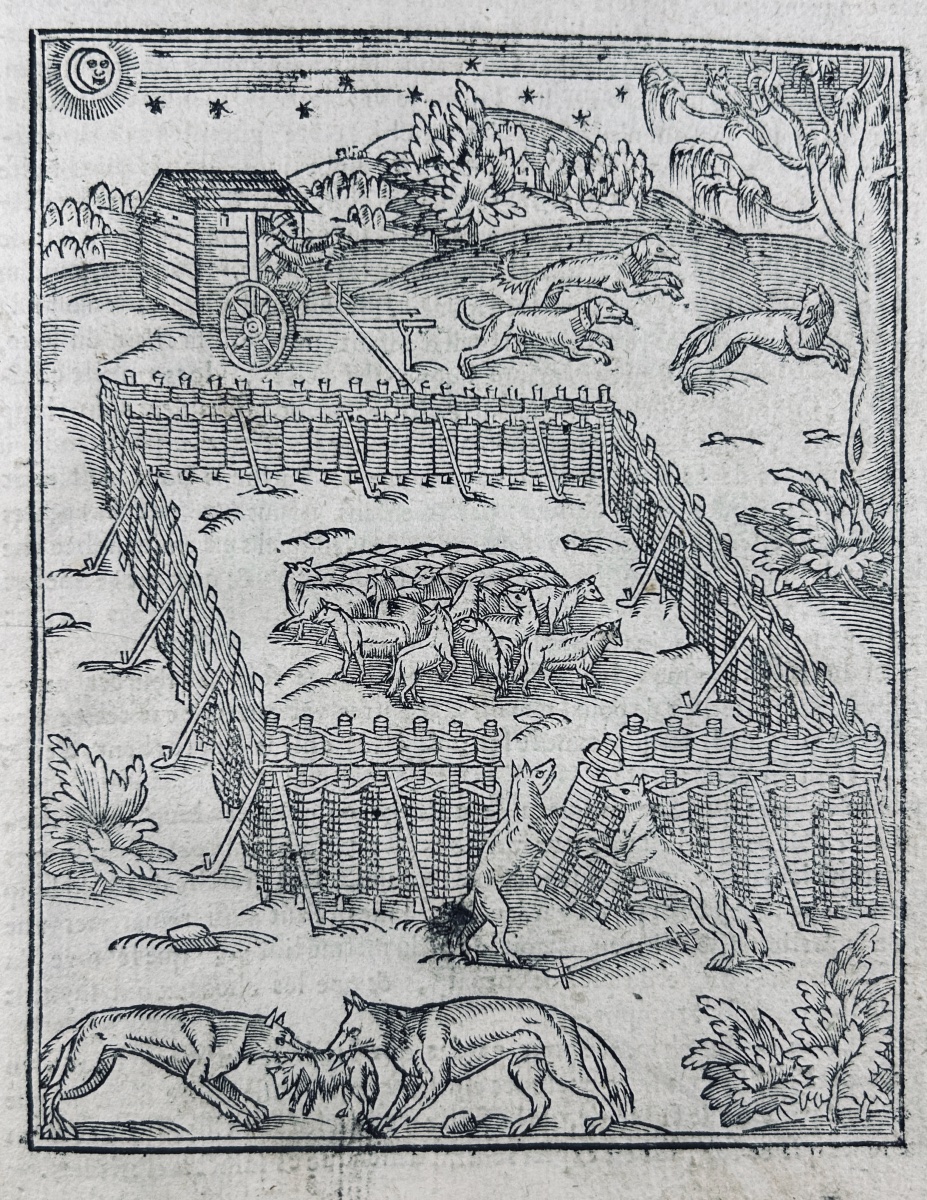
Elsewhere in these pages, a Capuchin friar teaches you to tell a wandering soul from a demon in disguise. A sea captain to François I explains how to hunt the wolves that peasants swore were something worse. Daniel Defoe, of Robinson Crusoe, writes Satan’s political biography with a perfectly straight face. And Balthasar Bekker, a Dutch minister, makes the most dangerous argument of all: that the Devil has no power in this world. It cost him his pulpit.
Five books, from $569. Lock the doors.
Hunter's lesson
The Devil Is in the Date
Search for Noël Taillepied’s 1617 Traité de l’apparition des esprits and you’ll get a dozen “hits.” Most read something like Traité de l’apparition des esprits 1616 [Leather Bound], priced at about $30, shipping free from Delhi. They’re print-on-demand reprints, modern scans of old books bound in imitation leather. The date in the title belongs to the original being copied, not to the book you’d receive.
This is the most common trap in online book hunting, and it’s not new. Kessinger, Legare Street Press and dozens of print-on-demand sellers have flooded AbeBooks, eBay and Amazon with facsimiles whose titles carry a 16th- or 17th-century date. Search filters treat that date as real, so a sort by “oldest” or a hunt for “1617” turns up mostly modern copies. Some sellers are honest about it in the fine print. Others leave it vague.
A few habits keep you safe. Look for an ISBN, since books printed before 1970 don’t have one. Check the publication year in the listing details, not the title. Be suspicious of phrases like “restored reprint,” “leatherbound edition” and “may contain blurry pages.” When the price is less than the shipping on a real copy, it almost certainly isn’t one.
The real 1617 Taillepied costs about seventy times as much as the fakes. Make sure you know which one you’re buying.




 [ THE BARGAIN ]